Relocating to the Charleston area can feel exciting right up until you realize how different each part of the region really is. A quick look at the map does not tell you what daily life feels like when your routine depends on bridges, major corridors, trail access, or proximity to the water. This guide will help you sort through Charleston-area neighborhoods by lifestyle, setting, and commute patterns so you can focus on the areas that fit you best. Let’s dive in.
Why Charleston Feels So Different
Charleston is shaped by waterways, marshes, islands, and major corridors. The city describes its geography as six land areas: the downtown peninsula, West Ashley, James Island, Johns Island, Daniel Island, and Cainhoy.
For you as a relocator, that means the region often feels like a collection of distinct lifestyle zones rather than one continuous metro area. Two neighborhoods may look close on a map but live very differently depending on the route, bridge access, and overall pace of the area.
Start With Your Daily Priorities
Before you narrow your home search, think beyond square footage and price. In Charleston, your day-to-day experience is often shaped by how much you value walkability, outdoor access, historic character, beach proximity, or a simpler commute.
A helpful way to start is by asking yourself a few practical questions:
- Do you want to be close to downtown activity or farther from it?
- Are you hoping for a walkable setting or do you prefer a more suburban layout?
- How important are parks, trails, or waterfront views?
- Do you want more space and a lower-density setting?
- Will you need to cross a bridge or travel through I-26 during peak hours?
Downtown Charleston and the Peninsula
If you picture Charleston as historic streets, preserved buildings, and a more urban lifestyle, the peninsula is likely where your search begins. The city’s Downtown Plan covers both the business and residential sides of downtown, and King Street is described as the region’s shopping and dining hub.
This area includes historic neighborhoods such as Cannonborough/Elliotborough, Radcliffeborough, Ansonborough, Eastside, Harleston Village, Charlestowne, and the Garden District. The setting is dense, walkable, and full of historic character, with a mix of residential and commercial uses woven together.
Downtown can be a strong fit if you want to live close to restaurants, shops, and everyday activity. It is especially appealing if walkability and architecture matter more to you than having a larger lot or a more spread-out suburban layout.
It is also important to understand the parking setup. The city created residential parking permit districts in 1975, and those districts now cover much of downtown, with more than 8,000 permits issued annually.
Best fit for downtown
Downtown may fit you best if you want:
- Walkability
- Historic architecture
- A mixed-use urban setting
- Close access to shopping and dining
Mount Pleasant
Mount Pleasant often appeals to relocators who want a polished suburban feel with strong access to the water. The town notes that it has experienced tremendous development over the past 30 years, which creates a wide contrast between its preserved older areas and newer growth patterns.
The Old Village Historic District is the town’s preserved core and is described as a quiet residential area of small and large houses with harbor views and a strong preservation ethic. That gives you one side of Mount Pleasant. On the other side, you will find areas shaped by newer suburban development.
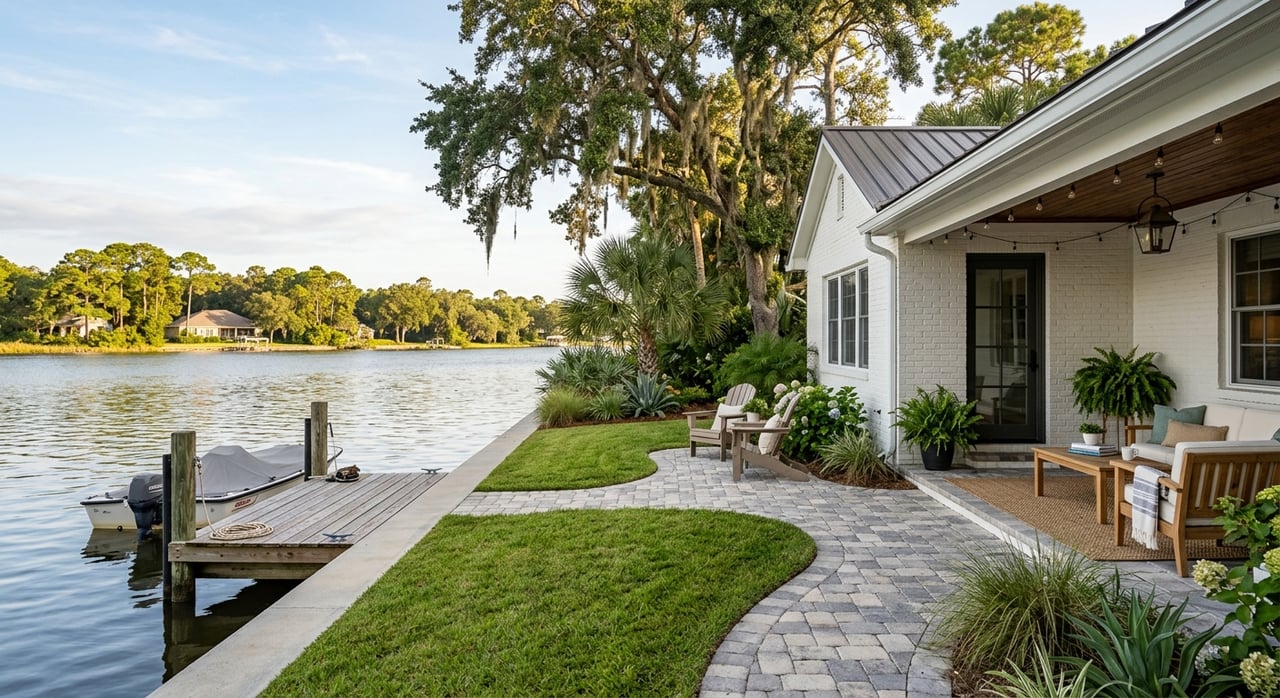
Shem Creek and the waterfront park system help define the lifestyle here. If you want a setting that balances neighborhood living with outdoor and harbor-oriented amenities, Mount Pleasant often lands high on the list.
Best fit for Mount Pleasant
Mount Pleasant may fit you best if you want:
- A suburban-plus-waterfront feel
- Access to harbor-oriented amenities
- A choice between older village character and newer development
- A polished, outdoor-focused lifestyle
West Ashley
West Ashley is often the middle-ground option for relocators who want variety. According to Plan West Ashley, the area is shaped by work around housing, infill, parks, transportation, and the revitalization of commercial corridors.
For you, that usually translates into a broad housing mix and a range of neighborhood settings. The city notes that areas around the West Ashley Greenway range from urban mixed-use settings to suburban and rural-type settings, which gives West Ashley a wider spread than many newcomers expect.
The West Ashley Greenway is a major lifestyle feature. It is an eight-mile linear park and part of a 42-mile off-street bicycle and pedestrian network, making it one of the area’s most useful trail systems.
If you want options, practical access, and a location outside the downtown core, West Ashley is often worth a close look. It tends to work well for buyers who want flexibility in home style, lot pattern, and everyday routine.
Best fit for West Ashley
West Ashley may fit you best if you want:
- A broad housing mix
- Trail and outdoor access
- More variety in neighborhood feel
- A location outside downtown
North Charleston
North Charleston offers a very different kind of relocation search. Its comprehensive plan highlights Park Circle, Rivers and Remount, and the Cooper River and navy base area as places with distinct identities.
Park Circle was laid out as a Garden City-style development in 1915, and most surrounding homes were built between 1915 and 1940. The city describes East Montague as a thriving main street with shops, restaurants, and small offices, and planning materials note that the area has seen a renaissance.
Elsewhere in North Charleston, Rivers and Remount are described as heavily commercial and automobile-oriented. The Cooper River and former navy base area is being redeveloped into a mixed-use riverfront district anchored by Riverfront Park.
For many buyers, North Charleston is where the comparison becomes very practical. You may find yourself choosing between older in-town neighborhoods, original homes and bungalows in Park Circle, or redevelopment-oriented options closer to the riverfront.
Best fit for North Charleston
North Charleston may fit you best if you want:
- Urban neighborhoods with character
- Redevelopment energy
- Access to major employers and the airport
- A mix of older homes and newer mixed-use development areas
Summerville
If your ideal move includes a more inland, suburban rhythm, Summerville deserves a spot on your list. The town brands itself as the Flower Town in the Pines and highlights its Downtown Historic District, parks system, and trail network.
Summerville’s parks and public spaces include Hutchinson Square, Azalea Park, Sawmill Branch Trail, and Oakbrook Nature Trail. The Sawmill Branch Trail is a paved walking and biking path just under seven miles long and part of the larger Loblolly Greenway.
This area often appeals to relocators who want some separation from the peninsula and beach communities while still enjoying a defined town center and outdoor amenities. It can feel more small-town and suburban, with a historic downtown core that adds a sense of place.
Best fit for Summerville
Summerville may fit you best if you want:
- A more inland lifestyle
- A suburban setting with a historic downtown core
- Parks and trails as part of daily life
- A small-town feel within the broader Charleston area
James Island and Johns Island
James Island and Johns Island both offer a stronger Lowcountry setting, but they do not feel the same. James Island is shaped heavily by Folly Road, which the city identifies as a major thoroughfare, an evacuation route, and the corridor connecting West Ashley, James Island, and Folly Beach.
James Island also includes major recreation assets such as the James Island Recreation Complex and Harborview/Fort Johnson Park. If you want a setting with island identity and useful connections to other parts of the area, James Island can be appealing.
Johns Island leans more rural in the city’s planning language. Official materials emphasize preserving its rural-esque character, natural vegetative buffers, and unique settlements, while also noting larger tracts and potential development sites along Maybank Highway.
For relocators, Johns Island often comes into the conversation when space matters. If you are looking for lower-density options and a little more breathing room than you are likely to find on the peninsula, Johns Island may be a better match.
Best fit for James and Johns Island
These areas may fit you best if you want:
- A stronger Lowcountry setting
- More separation from downtown
- Recreation access on James Island
- More space and lower-density options on Johns Island
Daniel Island
Daniel Island offers a more planned, modern island setting. City materials describe it as a 4,000-acre island with a pedestrian-friendly downtown, charming neighborhoods, and hundreds of acres of parks and green space.
The island is built around a mixed-use town-center framework and strong recreation infrastructure. That can make it attractive if you want a neighborhood environment with modern planning, outdoor amenities, and a waterfront backdrop.
Daniel Island tends to appeal to buyers who want order, connectivity, and green space in one place. If that combination matters to you, it is worth comparing with Mount Pleasant and parts of West Ashley.
Best fit for Daniel Island
Daniel Island may fit you best if you want:
- A pedestrian-friendly town center
- Modern planning and neighborhood design
- Parks and green space
- A waterfront setting with recreation infrastructure
Sullivan’s Island and Isle of Palms
For some relocators, the search starts and ends with the beach. If that is you, Sullivan’s Island and Isle of Palms deserve special attention.
Sullivan’s Island is a narrow barrier island with 3.5 miles of beachfront and a mostly single-family residential land-use pattern. It also maintains strict beach-use rules and parking controls, which is important to understand before you focus your search there.
Isle of Palms offers seven miles of beaches and a housing mix the city describes as condos, cottages, and oceanfront mansions. If your top priority is a beach-oriented lifestyle, these communities may be the clearest fit, but daily logistics like parking and access should be part of your decision.
Best fit for the beach communities
These areas may fit you best if you want:
- Daily beach access
- A coastal lifestyle first
- Single-family focus on Sullivan’s Island
- A broader housing mix on Isle of Palms
Don’t Ignore the Commute
In the Charleston area, commute planning matters more than many relocators expect. The region is bridge- and corridor-driven, and the city’s Traffic Management Center monitors major routes such as the Arthur Ravenel Jr. Bridge and the I-26 corridor.
CARTA’s route system reflects the same geography. Regular routes serve areas such as Downtown, Mount Pleasant, Folly Road, Savannah Highway, and Dorchester Road and Airport areas, while express routes connect James Island to North Charleston, Mount Pleasant to West Ashley, and Dorchester Road to Summerville.
That means your best-fit neighborhood is not just about style or budget. If your routine depends on crossing a bridge or moving through I-26 during peak times, it is smart to evaluate the area based on real travel patterns, not just map distance.
How To Narrow Your Search
When you relocate to Charleston, the goal is not to find the "best" neighborhood. It is to find the area that best supports your version of daily life.
A simple way to narrow your search is to group neighborhoods by what matters most to you:
- Walkability and historic character: Downtown Charleston
- Suburban feel with waterfront access: Mount Pleasant
- Variety and trail access: West Ashley
- Urban energy and practical access: North Charleston
- Inland small-town feel: Summerville
- Island living and more space: James Island or Johns Island
- Planned island living: Daniel Island
- Beach-first lifestyle: Sullivan’s Island or Isle of Palms
A relocation move is easier when you start with your routine, your comfort level with commuting, and the setting that feels most like home. If you want help comparing Charleston-area neighborhoods and finding the right fit for your move, Jadah Hernandez is here to guide you with local insight and a calm, client-first approach.
FAQs
What is the most walkable part of the Charleston area for relocators?
- Downtown Charleston and the peninsula are generally the strongest fit for walkability, historic architecture, and a mixed-use urban lifestyle.
Which Charleston-area neighborhood is best for a suburban feel near the water?
- Mount Pleasant is often the best fit for buyers looking for a suburban-plus-waterfront feel, with both preserved older areas and newer growth.
What Charleston area is best if you want more housing variety?
- West Ashley is often a good option if you want a broader housing mix, varied neighborhood settings, and access to the West Ashley Greenway.
Which Charleston-area community is better for a small-town feel?
- Summerville is commonly the best fit for buyers who want a more inland, suburban setting with a historic downtown core, parks, and trails.
What should relocators know about Charleston commutes?
- Charleston-area commutes are heavily shaped by bridges, I-26, and major corridors, so it is important to consider peak travel times and route patterns when choosing where to live.